

Your medical plan administratorLucent Health
Group #: J08
Payor ID: 62308
Customer service: 1-877-236-0844
Website: lucenthealth.com/cypress/
Plan effective September 1, 2026Your medical provider network is Cigna.


-
You can choose between 2 medical plans, both of which offer you the freedom to choose in and out of network provider options.
A Cigna PPO Plan
A HDHP / HSA Plan (HSA provided through Fidelity)
-
When you use an in-network provider, the percentage you pay out of pocket will be based on a set fee, which is usually lower than the actual charge. If you use a provider who is out-of-network, you may be responsible for paying the difference between the reasonable and customary (R&C) charges and what the provider charges. R&C is the amount that is generally considered reasonable based on the average that most providers charge for a particular service in a geographic region.
-
The Lucent Member Frequently Asked Questions page includes information on the following:
The Lucent Health App
Lucent member portal and digital tools
And other service available to you
-
To search for a provider, visit the myCigna button below. If you need more guidance on how to search for a provider, please click on the Step-by-step Cigna Provider Search button in the Quick Links section below.
Visit the Contribution Rates page to see the monthly amount you pay for medical coverage deducted from your paycheck.
Summary of Covered Benefits
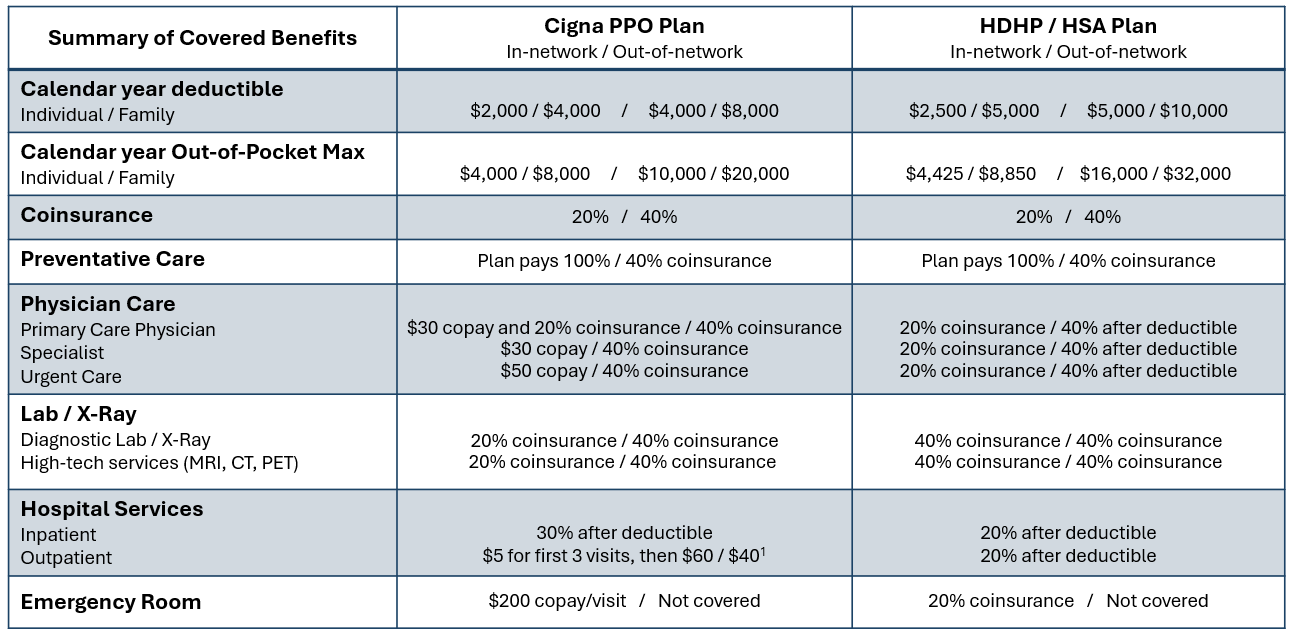
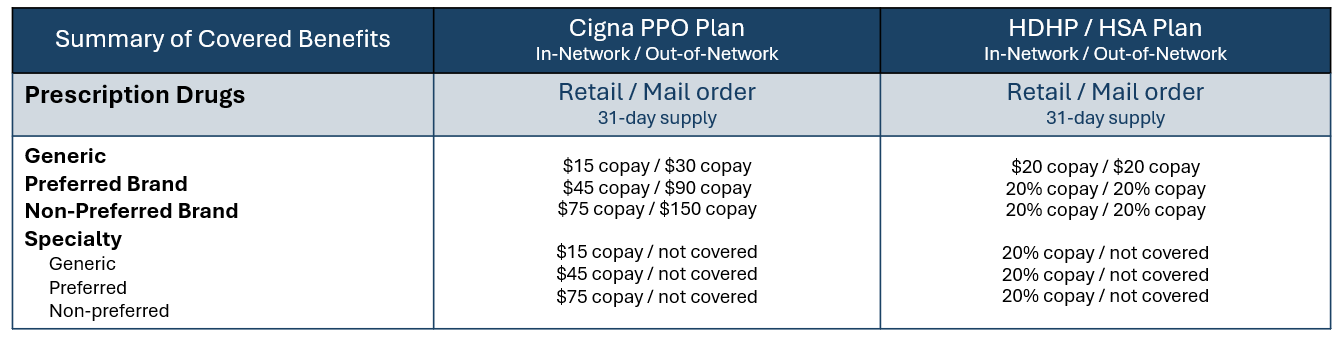
The table below summarizes the benefits of each medical plan. Please refer to the official plan document in the Quick Links section for additional information on coverage and exclusions.


TPA – Third Party Administrator – A company like Lucent Health that has been hired to administer your benefits.
PBM – Prescription Benefit Manager – A company hired by an employer group to provide a wide range of prescription benefit programs that emphasize quality and cost-effective solutions.
SBC – Summary Benefits of Coverage – An easy-to-read summary that lets you make apples-to-apples comparisons of costs and coverage between health plans. You can compare options based on price, benefits, and other features that may be important to you.
HSA – Health Savings Account – A savings account used in conjunction with a high-deductible health plan (HDHP) that allows users to save money tax-free for IRS-qualified medical expenses. An HSA allows the employer to make contributions to the account, and the account balance rolls over from year to year.
SPD – Summary Plan Description – an important document that tells participants what the plan provides and how it operates, including when an employee can begin to participate in the plan, how service and benefits are calculated, when benefits become vested, and how to file a claim for benefits. Employers are legally obligated by The Employee Retirement Income Security Act (ERISA) to provide employees SPDs for each benefit plan offered by the employer.
Healthcare benefits acronyms & terms.
Commonly used acronyms used in your health benefits discussions
Copayment – A copayment (or copay) is the fixed dollar amount you pay for certain in-network services. In some cases, you may be responsible for coinsurance after the copay is made.
Coinsurance – Coinsurance is the percentage of covered expenses share by you and the plan. In some cases, coinsurance is paid after you meet a deductible. For example, if the plan pays 80% of an in-network covered charge, you pay the remaining 20%.
Annual deductible – This is the amount of money you must first pay out of pocket before your plan begins paying for service covered by coinsurance is your annual deductible. After you meet your deductible, the plan pays for a percentage of eligible expenses (coinsurance) until you meet your out-of-pocket maximum.
Out-of-pocket maximum – The amount of coinsurance you will be required to pay for eligible health care expenses is limited. Once you reach the maximum amount, the plan begins to pay 100% of eligible expenses. Please note that there may be separate in-network and out-of-network annual out-of-pocket maximums.
Preventative Care Services - Generally routine wellness exams and screenings. Non-preventative services are those considered treatment or diagnosis for an illness, injury, or other medical conditions.